
What Makes a Truly Professional LED Strip?
From colour consistency to copper content. The details that matter: At first glance, many LED strips seem similar. But for professionals working in retail, offices or architectural projects, the real difference is in the details. A reliable LED strip goes beyond the spec sheet. In this article, we highlight the features that define a high-quality, professional lighting product.
Consistent light quality makes all the difference
A high light output is important, but it’s not enough. Without stable colour rendering, a space can feel flat or unnatural. In commercial applications like shops, showrooms and hospitality, a CRI of ≥90 is essential to achieve natural-looking colours and visual comfort.
But good numbers on paper don’t always guarantee good performance. Poor binning: the way LEDs are sorted by colour and brightness can lead to visible differences between batches. At Tronix, we select chips with a stable spectrum, balanced phosphor layers and a maximum of 3 SDCM. For larger projects, we reserve batches to ensure colour consistency.
Copper content: an invisible performance factor
One factor that’s often overlooked is the amount of copper in the PCB. A thicker copper layer (e.g. 70 µm instead of 35 µm) provides better current flow and more effective heat dissipation. Strips with too little copper can overheat, lose voltage and wear out faster.
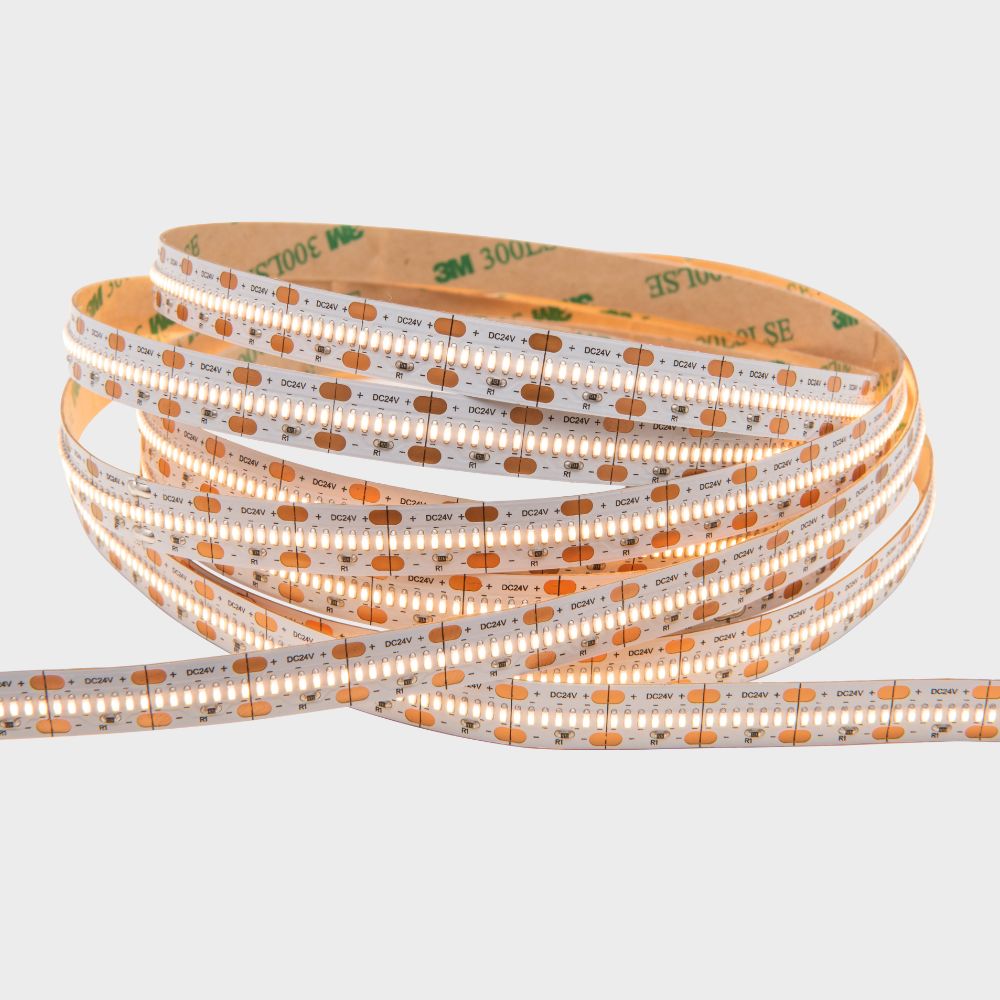
The LED type also plays a role. While 2835 is a standard choice for general use, we often choose 2010 (for compact layouts and short cutting lengths) or COB (for a smooth, dot-free light effect) in custom solutions. In all cases, we use only A-binned LEDs.
Precision matters: cutting length and flexibility
The shorter the cutting interval, the more precisely you can work (especially in showcases, furniture or stair lighting). Strips that can be cut every 10 mm offer maximum design flexibility. That said, frequent cutting can lead to poor contacts. We recommend soldering or using high-quality connectors – or factory-made custom lengths for larger volumes.
Use aluminium profiles – always
LED strips produce heat, and heat shortens their lifespan. Aluminium profiles help dissipate heat and provide a clean, professional finish. They significantly improve durability and visual performance. Always choose a profile that fits the strip’s width, with enough thermal mass and a suitable cover (diffused or clear).
Choose the right driver
Driver compatibility is critical. Voltage, wattage and dimming protocol must match the LED strip exactly. Common mistakes, like using a 12V strip on a 24V driver, or the wrong type of dimmer – can damage the driver and cause flickering or uneven output. Also keep voltage drop in mind when working with long strip lengths.
Reliable supply is key
A professional product deserves professional support. That means clear datasheets, consistent batches and transparent communication. At Tronix, we thoroughly test all new samples for colour consistency (SDCM), light quality, thermal behaviour, ease of installation and cutting accuracy. Only after passing all tests do we add a product to our range.
In short: details define quality
A true professional LED strip stands out not just through specs, but in how it performs on-site. Think binning, copper thickness, cutting precision and thermal control. Paying attention to these details helps you deliver lighting solutions that are reliable, efficient and built to last.
Want to know more about our selection process or need tailored advice? Reach out to our B2B team via sales@tronixlighting.com or call +31 413 330 380.
 Overview

